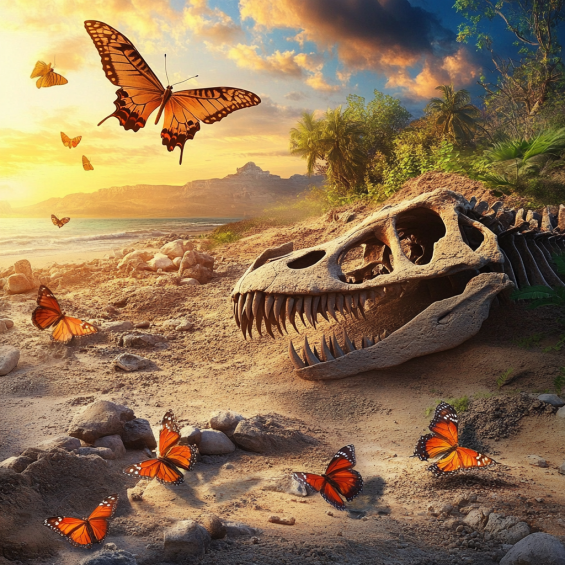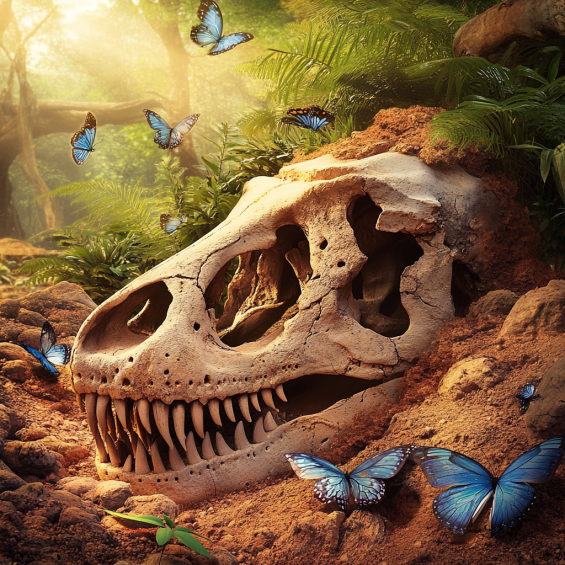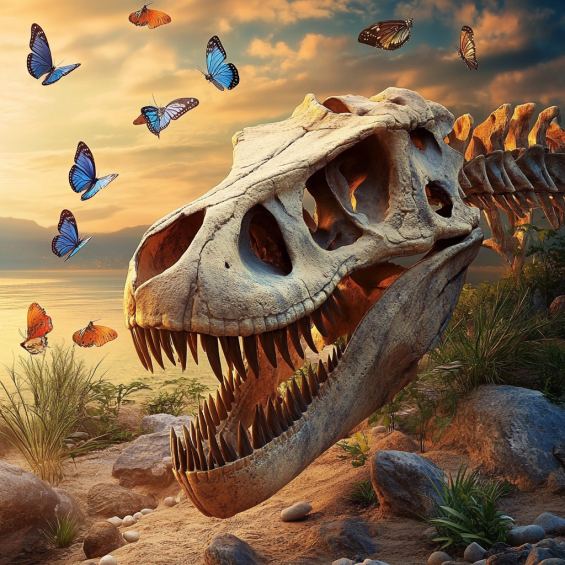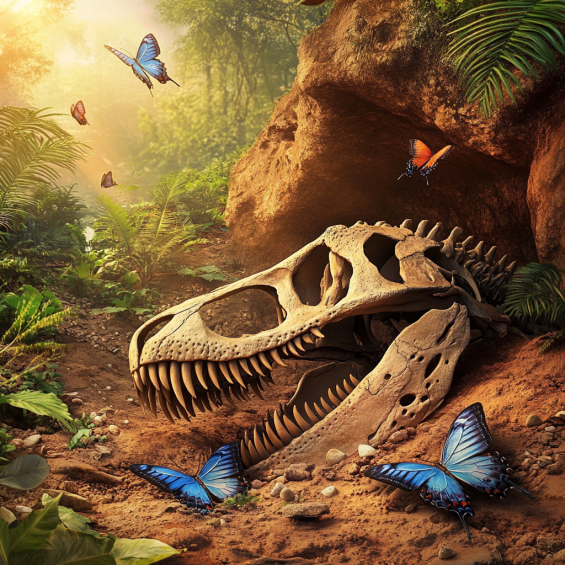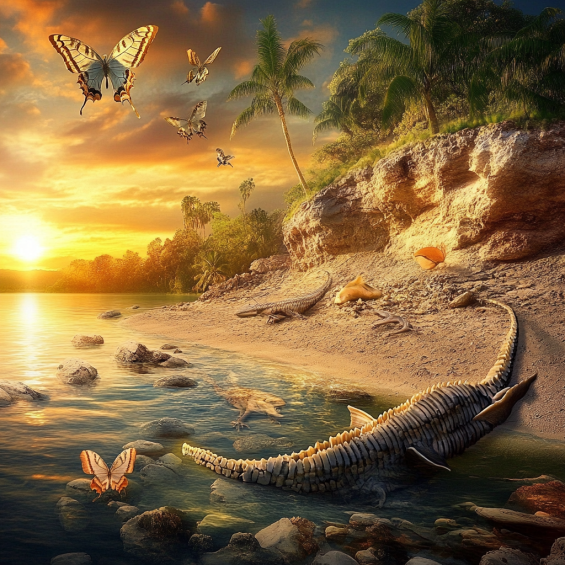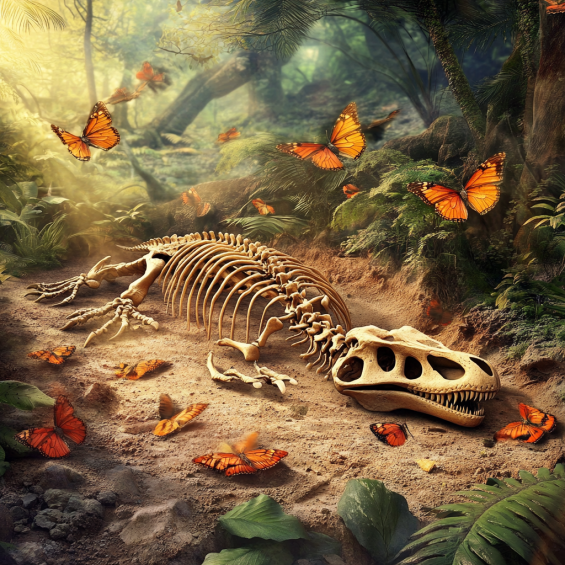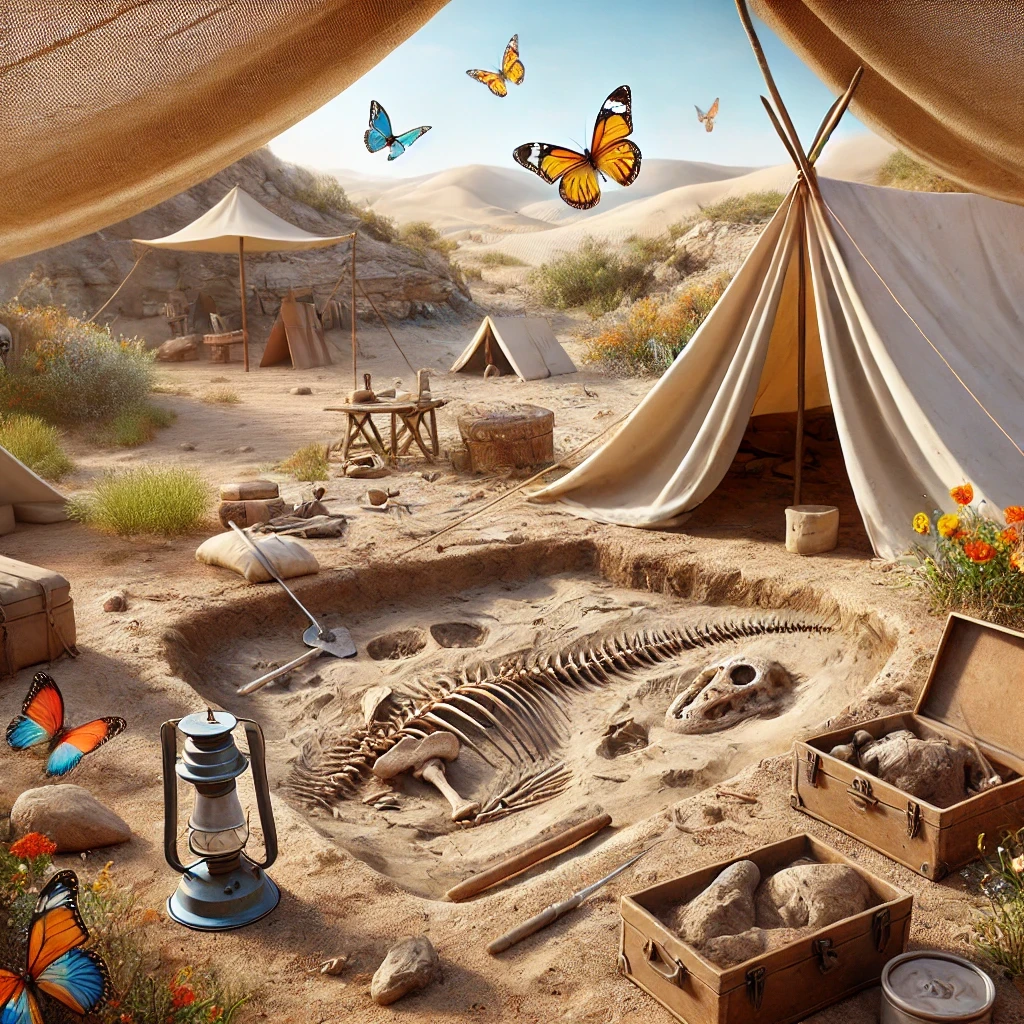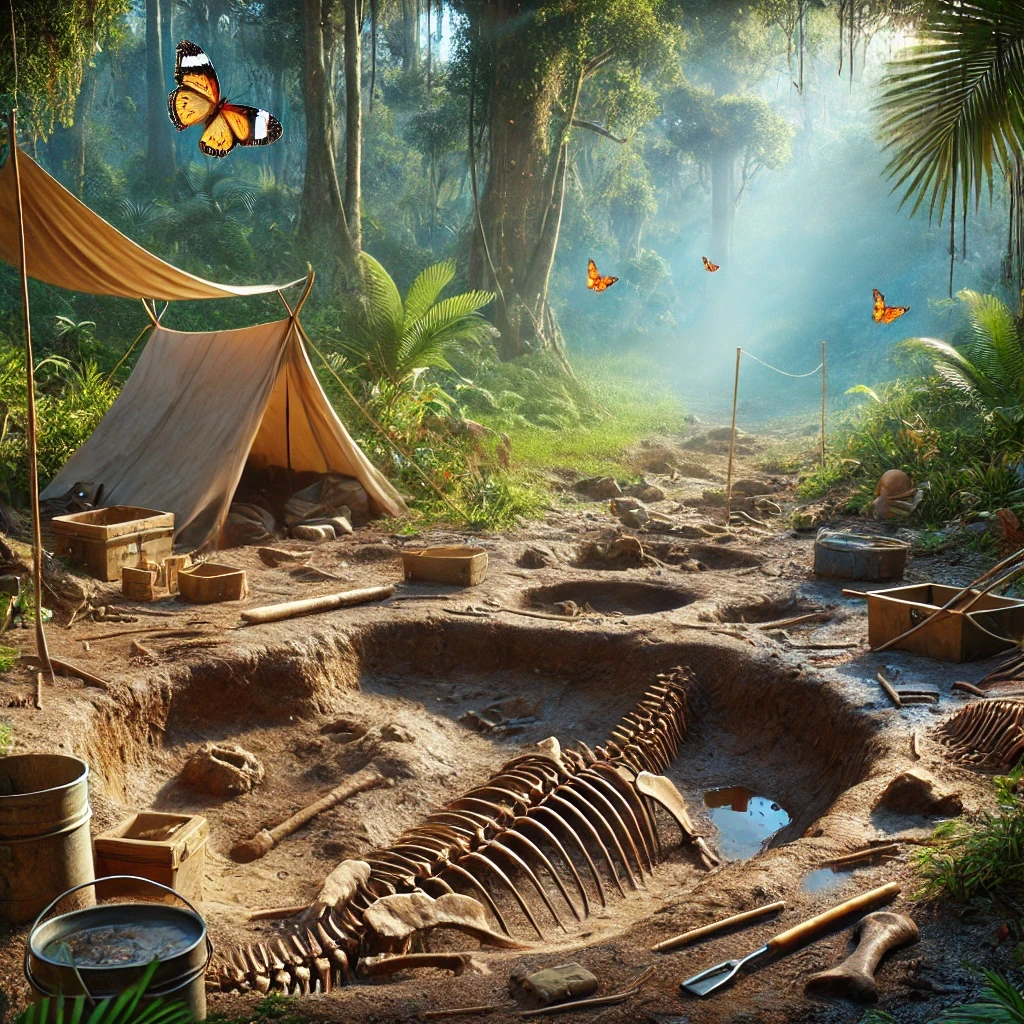



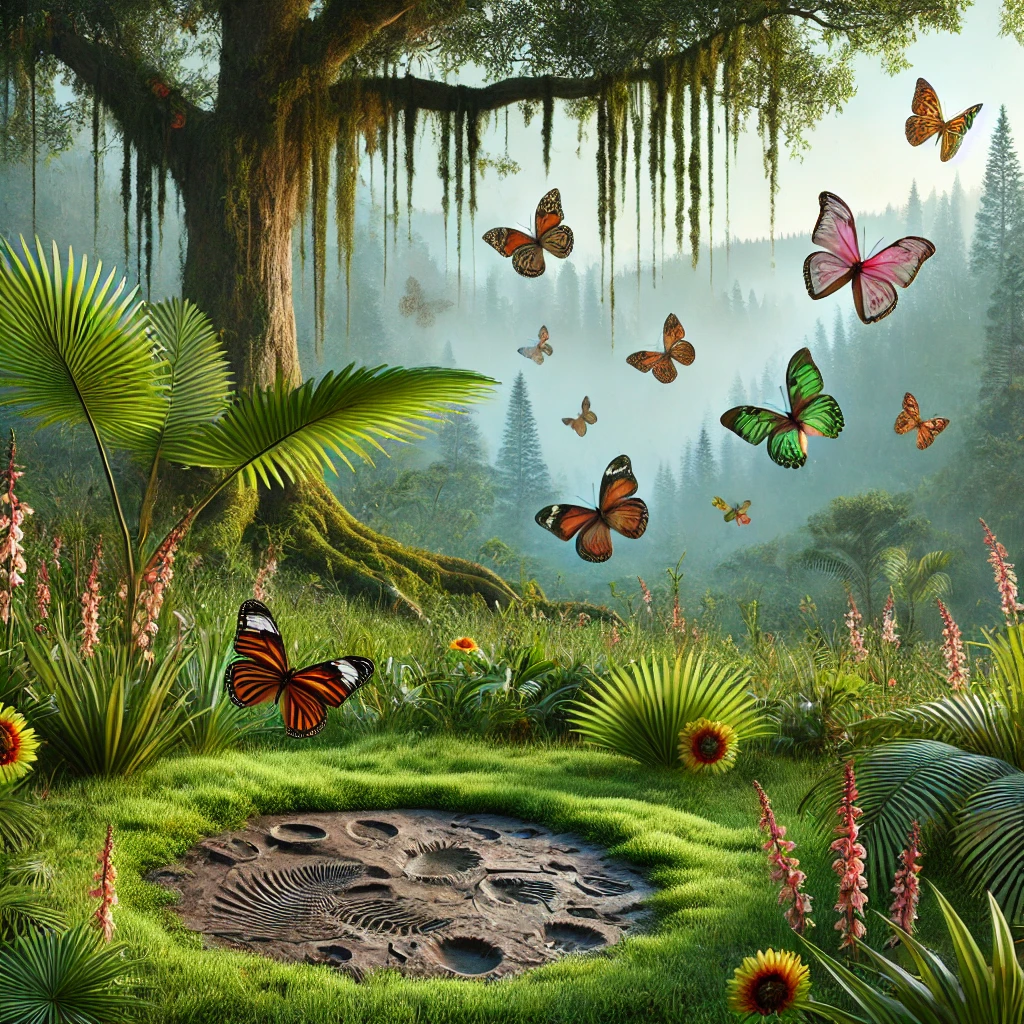
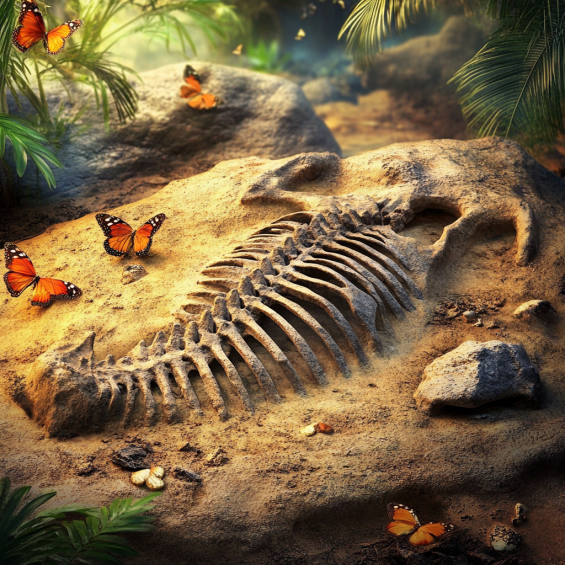
The shrieks of mighty reptiles have long gone silent, and the planet once dominated by dinosaurs for millions of years has been inherited by other creatures. Here at our site, however, you can trace their footsteps alongside exotic butterflies. Thanks to sites like this one, paleontologists from around the world can piece together ancient times, bone by bone, uncovering incredible secrets of that era. Follow the butterflies along the path of the dinosaurs! Can you find all the artifacts?
Predator's Track
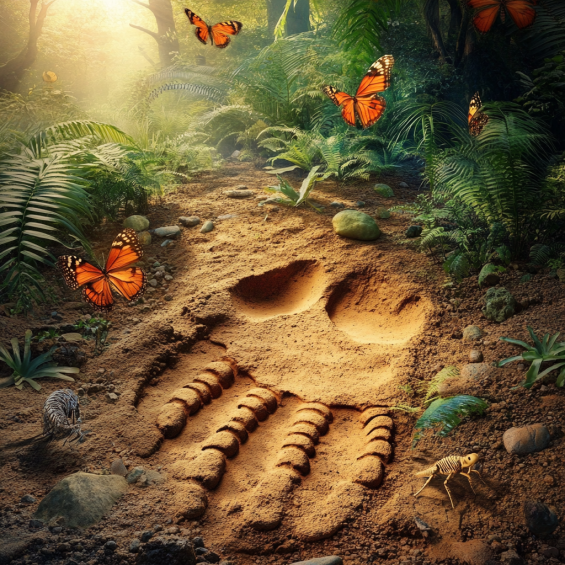
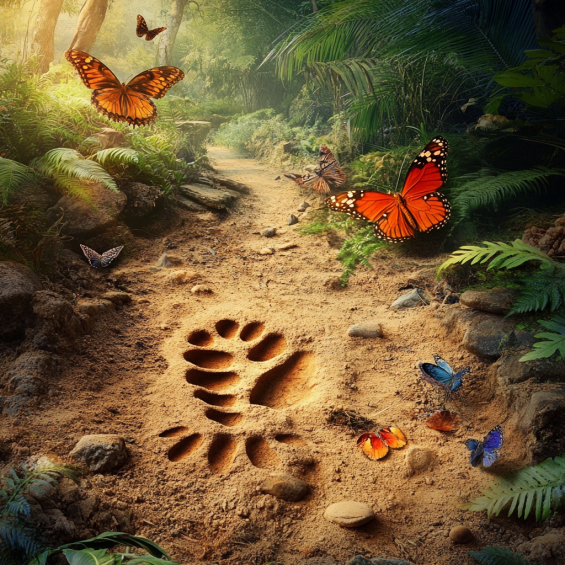
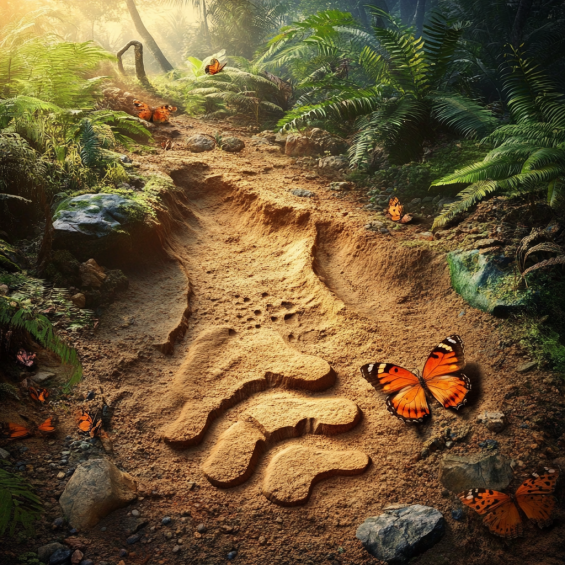
Do you know what an ichnofossil is? It’s a fossilized track, and ichnology is the branch of paleontology that studies them. It’s fascinating to imagine that a dinosaur stepped right here! Ichnofossils cannot be moved, so we know with certainty that dinosaurs once walked where these tracks were found. You can see one such ichnofossil here, left by a predator around 140 million years ago. Join in its footsteps and explore this adventure trail.
Do you know what an Ichnofossil is?
For those interested, here’s how these fossils are classified:
Cubichnia – resting traces, such as the resting marks of starfish.
Repichnia – crawling traces reflecting animals‘ movement.
Pascichnia – grazing traces from feeding activities.
Agrichnia – cultivating traces from organisms that tended areas for later consumption.
Fodichnia – feeding traces from organisms burrowing through the sediment.
Domichnia – dwelling structures, including burrows and tunnels often reinforced with a mucous layer.
Fugichnia – escape traces from sudden sediment deposits or predator threats.
Ribs
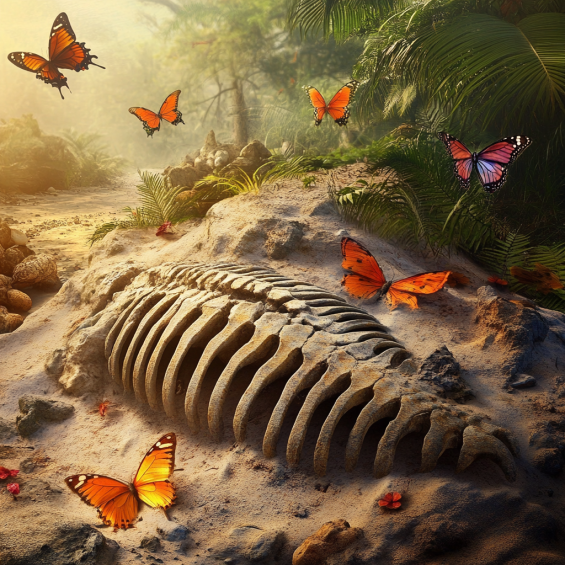
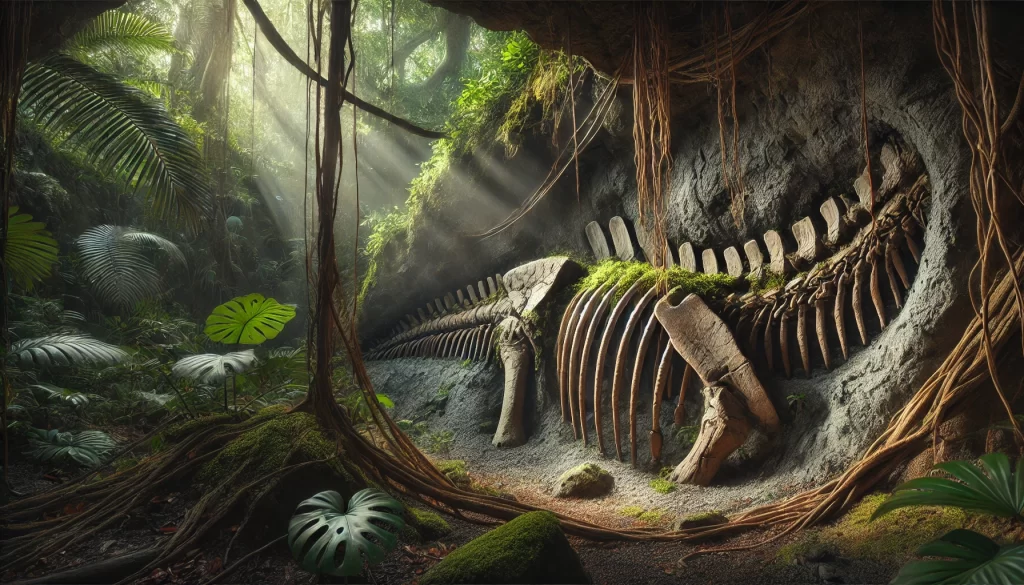
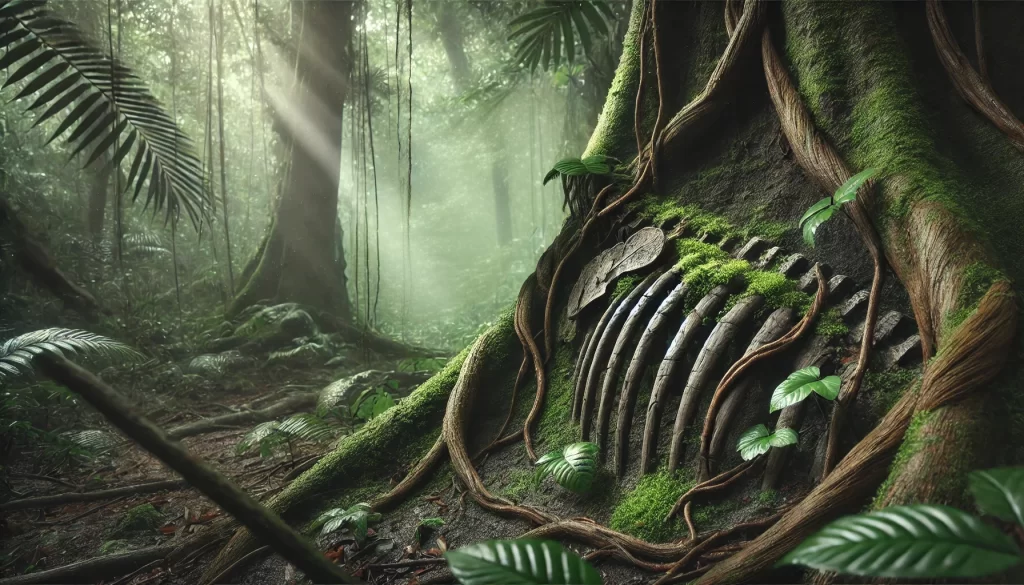
You are about to walk through the ribs of a Brontosaurus, each rib around 3 meters long, the average length of these dinosaur bones. Incredible, isn’t it? This giant is from the Late Jurassic period, about 155-152 million years ago, and lived in western North America. Nicknamed „Thunder Lizard,“ this specimen reached about 22 meters in length and weighed around 15 tons, with some brontosaurs estimated to reach up to 30 meters and 40 tons. Thanks to continued discoveries, we are still piecing together the puzzle of prehistoric life.
Craving ribs?
In 2017, a man in Pombal, Portugal, unearthed remarkably preserved Brontosaurus ribs in his backyard. Experts believe this could be one of the largest dinosaurs found in Europe, with paleontologists still discovering new bone fragments. WOW! Think about that the next time you want to dig a barbecue pit in your backyard!
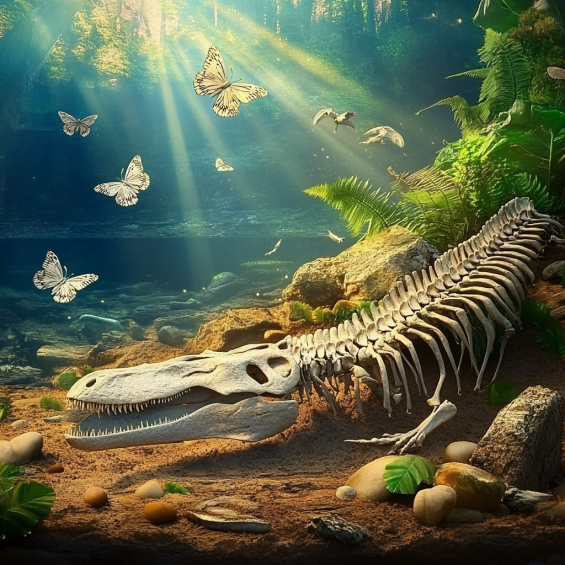
Skull of a young Tyrannosaurus rex
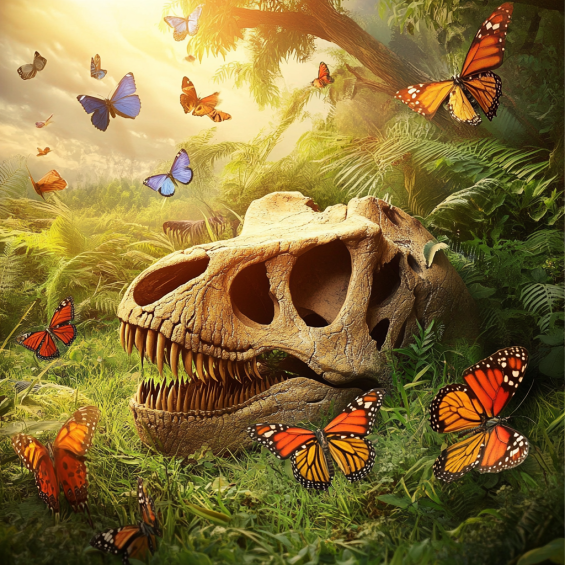
This is the one you’ve likely been most excited to see at our site! You’ve found the skull of a young Tyrannosaurus Rex. Known as the „King of Tyrant Lizards,“ it was one of the largest carnivorous dinosaurs and one of the biggest land predators ever, thanks to its enormous size.
This species was widespread, and according to recent findings, it lived about 90 to 66 million years ago across what is now the USA, Canada, and Mexico. So, it didn’t live during the Jurassic period, as suggested by Jurassic Park, but during the Cretaceous.
Adults averaged about 11 to 12.4 meters in length and weighed around 6,000 kg. However, according to a 2024 study by paleontologists Mallo and Hone, the largest specimen might have reached around 15 meters in length and weighed around 15,000 kg. Its teeth were as big as bananas, and it had 60 of them. Its jaw had a bite force of 6 tons. Quite terrifying! With one bite, it could tear off 100 kg of flesh.
Dinosaur National Monument
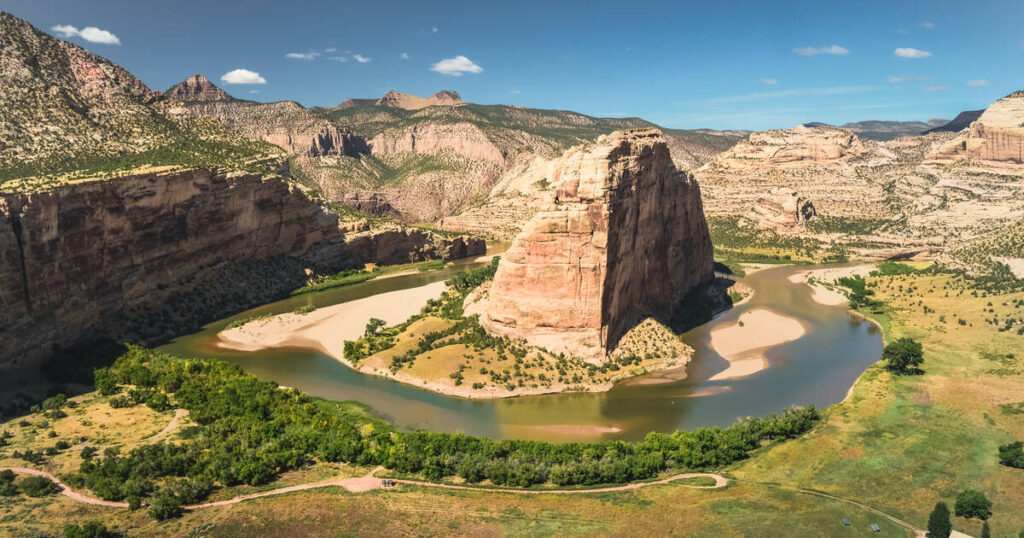
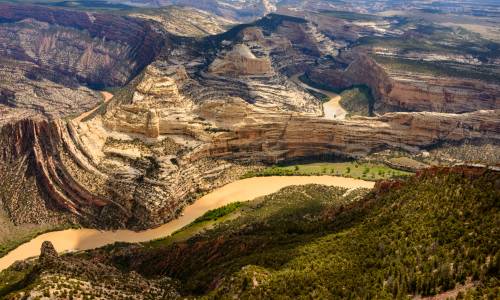
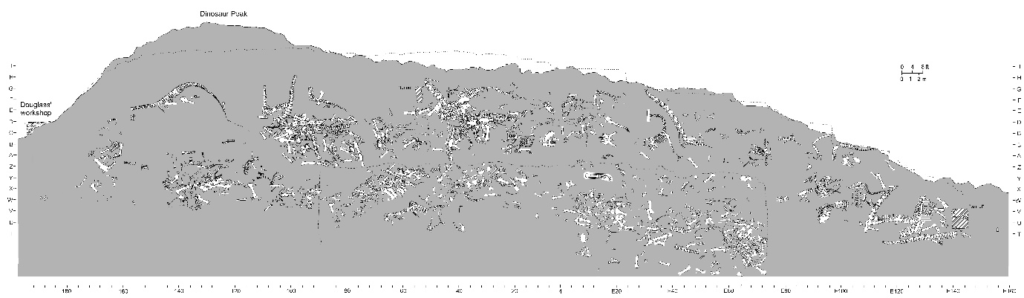
Dinosaur National Monument, visible in the valley, spans 85,326 hectares across Colorado and Utah, nestled in the Uinta Mountains‘ southeastern foothills. Erosion has exposed a treasure trove of dinosaur fossils here. In 1909, paleontologist Earl Douglas and his team began unearthing thousands of fossils for research.
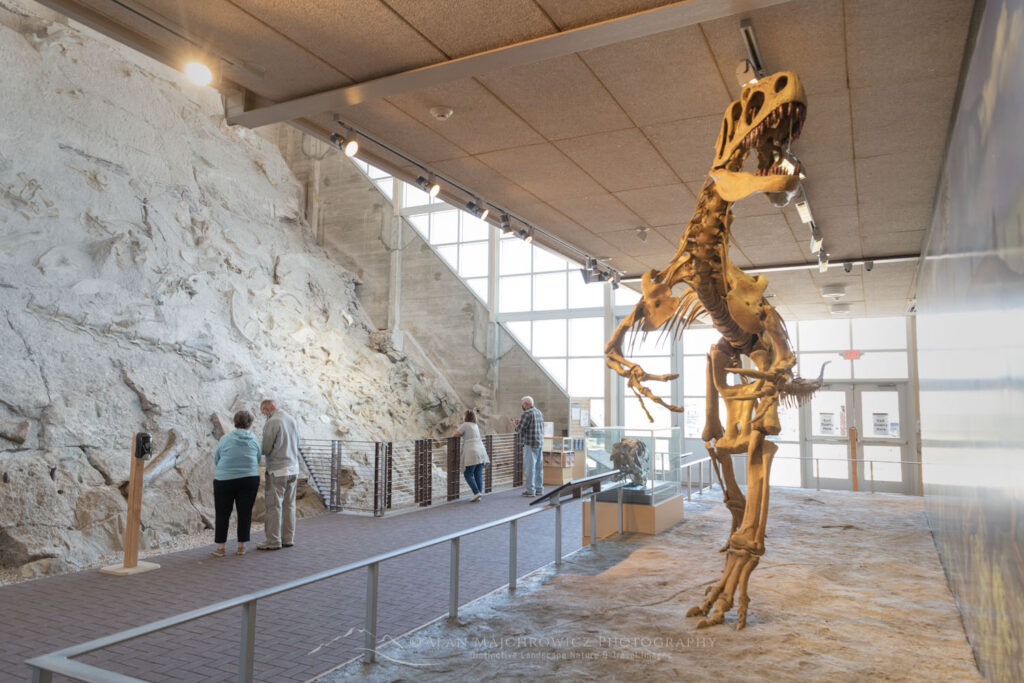
In the picture you can see a cross-section of the quarry with the bones found.
Douglas Quarry contains one of the most extensive collections of well-preserved Jurassic bones. Likely washed together by a massive flood, this site allows scientists to reconstruct a 150-million-year-old ecosystem. Bones remain in place for study, giving scientists a unique glimpse into dinosaur life.
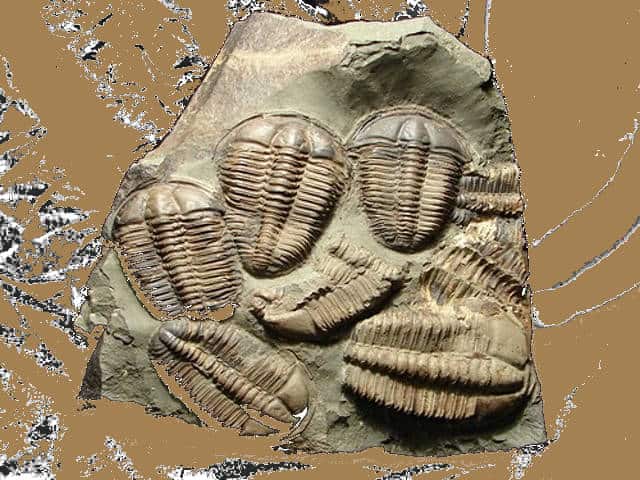
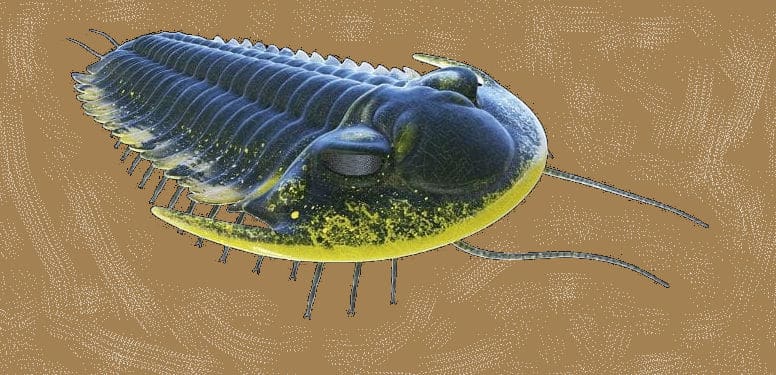
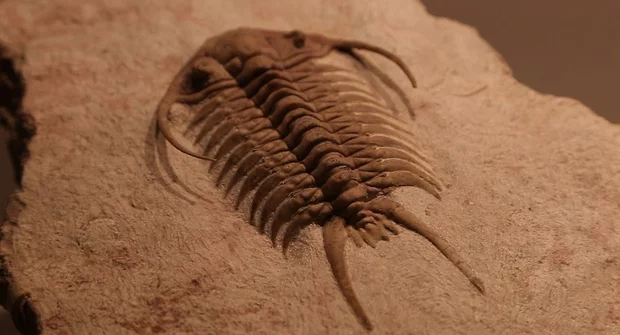
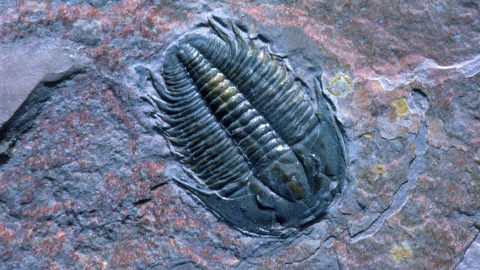
These are extinct arthropods that lived exclusively on the bottom of the sea. They range in size from 1 millimeter to 90 centimeters and there are more than 15,000 described species with new species being found and described every year. The largest known trilobite is Isotelux Rex from the Upper Ordovician deposits of North America with a body length of more than 70 centimeters. They knew how to do a very clever thing, and that is to curl up in a ball and protect themselves in the event of an attack, but wouldn’t it be useful for us?
Did you know that you can also find trilobites here? A group of scientists from the Faculty of Natural Sciences of Charles University even recently, thanks to new technology, described the eating habits of a prehistoric trilobite for the first time. It lived 465 million years ago at the bottom of the shallow Ordovician Sea, which moved in various ways until it became part of the newly formed continent of Europe. Thanks to these changes, the box of our trilobite found its way to us in Central Bohemia.
You can still find fossilized trilobites in Rokycansk. But be careful, they don’t just lie there, they are fossilized inside the so-called Rokycan balls – siliceous concretions that contain fossils of prehistoric organisms inside. They are collected mainly in the fields after agricultural machinery disturbs the rock layers under the topsoil and the balls reach the surface.
Trilobite
What’s crawling along the wall? Trilobites! These extinct arthropods are one of the most well-documented fossil groups thanks to their hard exoskeleton.
Trilobites lived exclusively on the seafloor and ranged from 1 millimeter to 90 centimeters, with over 15,000 described species and new ones discovered each year. The largest known trilobite, Isotelux Rex from North America, measured over 70 centimeters. They could roll into a ball for protection, a trick we might envy sometimes!
Did you know you can find trilobites in the Czech Republic too? Recently, scientists from Charles University used new technology to describe the diet of an Ordovician trilobite for the first time, a discovery from about 465 million years ago in what is now central Europe.
Ammonite
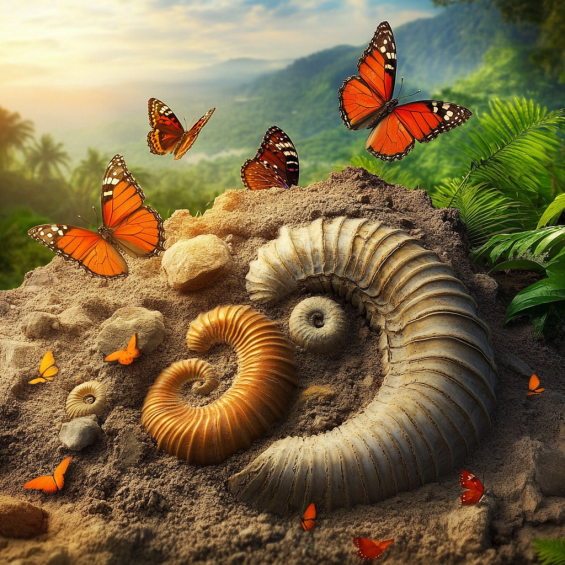
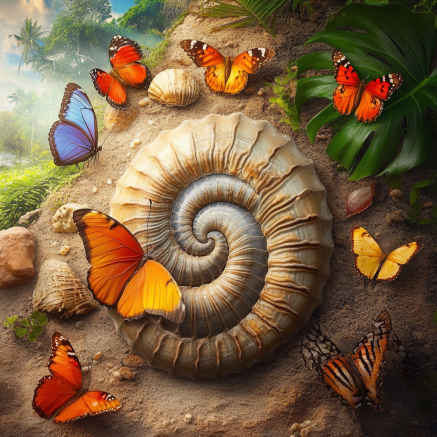
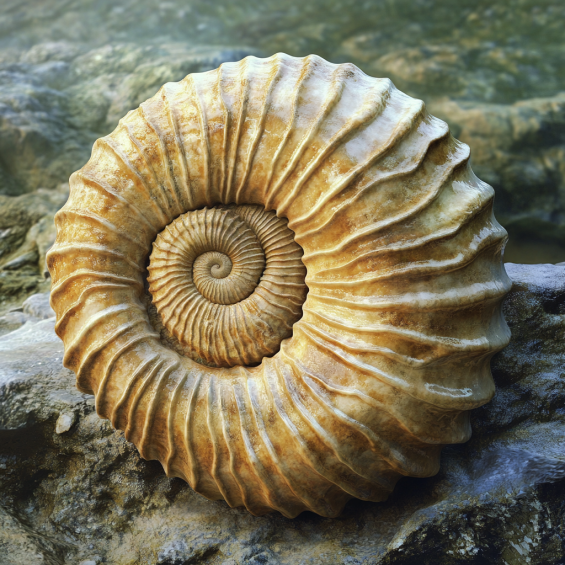
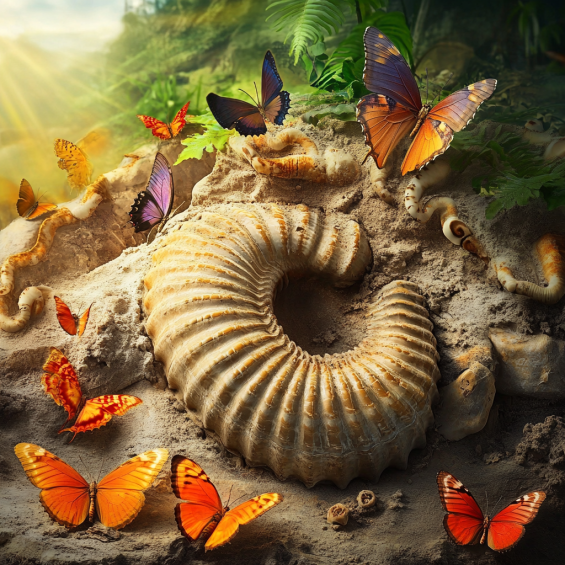
Congratulations! You’ve found ammonites on your adventure! These extinct predatory cephalopods met the same fate as the dinosaurs—extinction from an asteroid impact around 66 million years ago. They only lived in the seas and are closely related to modern cephalopods like octopuses, squids, and cuttlefish. They could even release dark ink to escape predators! Sometimes, remnants of this ink are still preserved in fossils.
Why are they called Ammonites?
Their fossilized spiral shells resembled ram’s horns, inspiring the name „Ammonis cornua“ (Ammon’s Horns) from Pliny the Elder, a Roman author of Naturalis Historia, the most significant Roman encyclopedia.
Ammonites are also found in the Czech Republic, so continue the hunt!
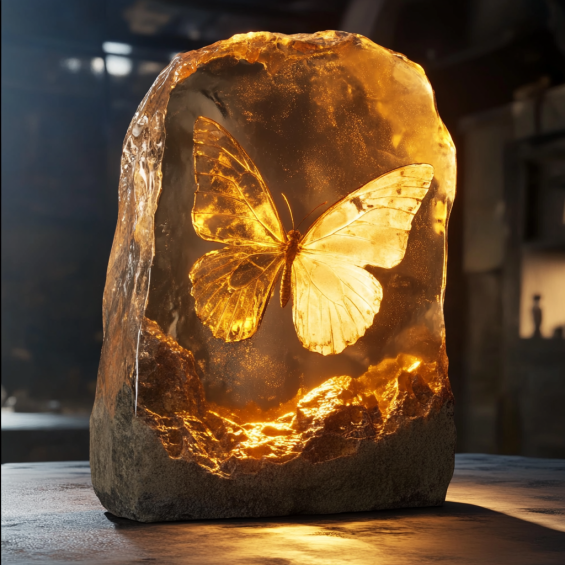
Large Piece of Amber with a Butterfly Inside
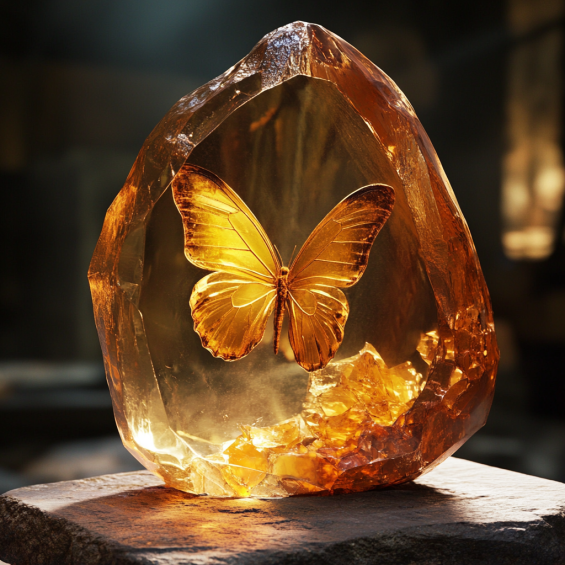
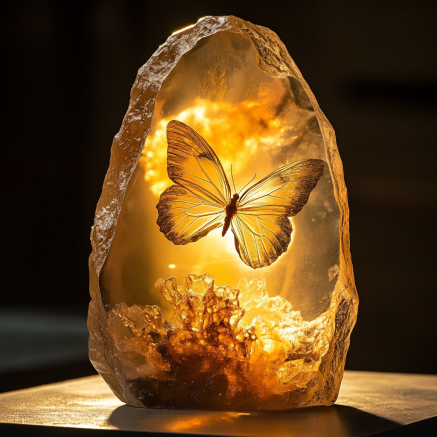
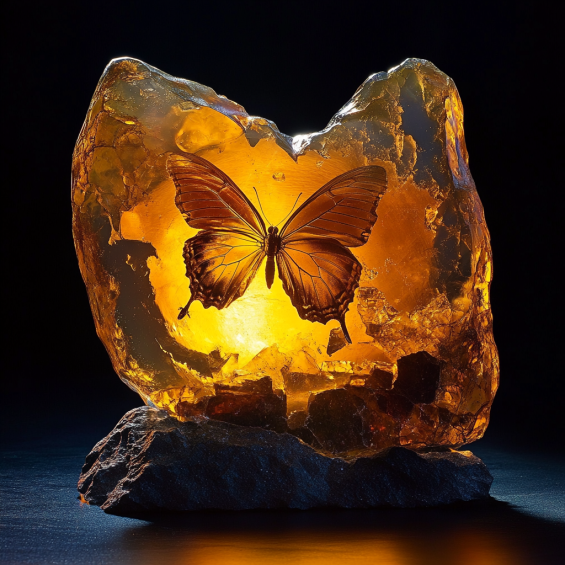
You have just discovered a fascinating and rare fossil: a butterfly encased in amber.
Butterfly in amber
Have you ever seen the movie Jurassic Park? Then you know that amber can preserve many interesting fossils! Although cloning dinosaur DNA is a Hollywood fantasy, amber still offers us plenty of valuable insights. Amber is essentially fossilized resin from ancient trees. When the resin was still fresh, insects that got stuck to the flowing resin were coated until they were fully trapped. This process separated organic matter from the air, preventing its decay.
Butterflies found in amber show that these beautiful creatures fluttered around the heads of dinosaurs! Take a moment to admire them all around you. How many can you see right now?
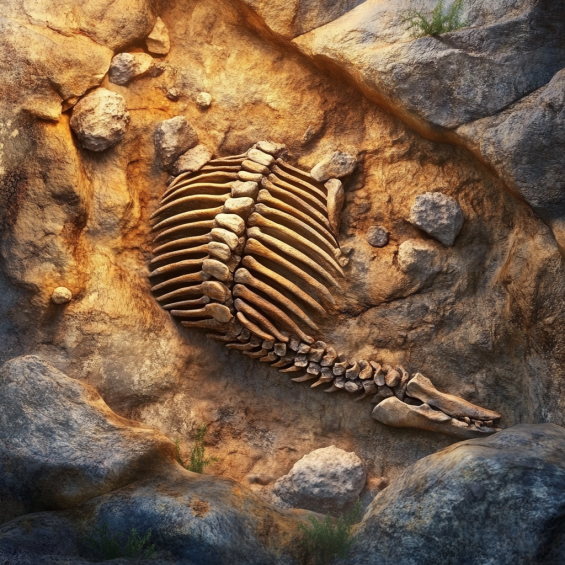
Plesiosaurus Juvenile by the Pond in the Rocks
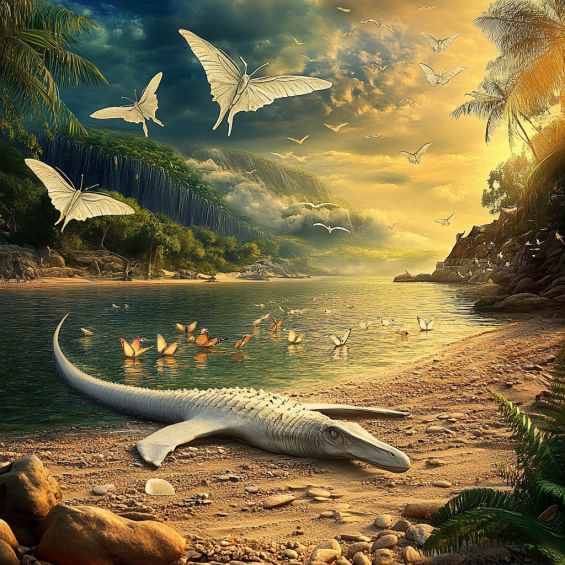
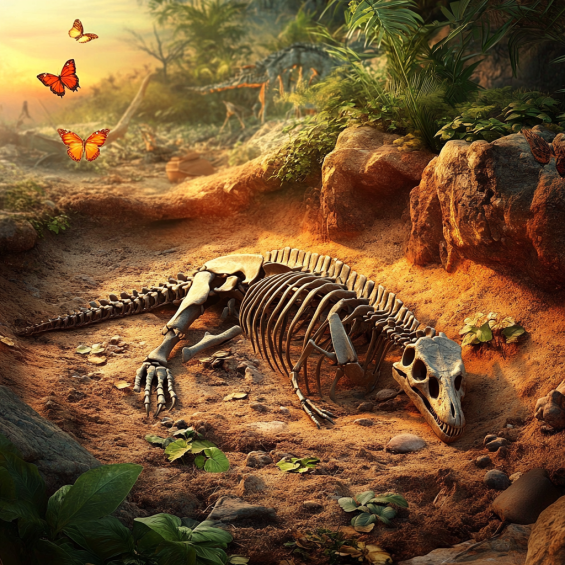
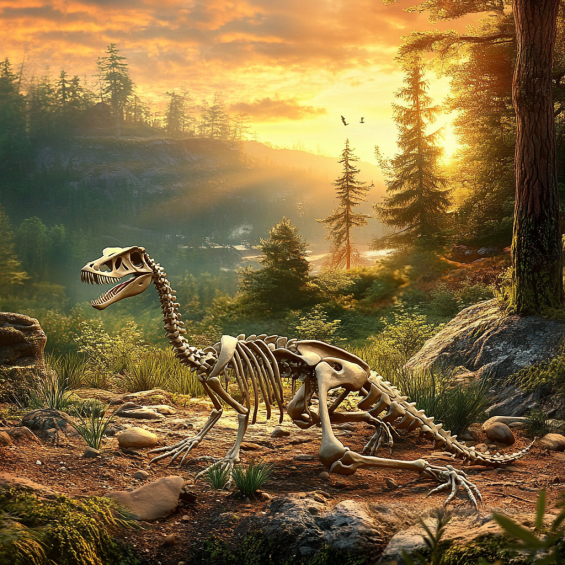
By our pond, you can see the skeleton of a young Plesiosaurus. This was a marine predatory reptile that lived during the Early Jurassic period, about 200 to 175 million years ago, in what is now England. It was one of the first scientifically recognized prehistoric reptiles.
The word „Plesiosaurus,“ meaning „close to reptiles,“ comes from the Greek „plesios,“ meaning „near,“ and the Latin word „saurus,“ meaning „reptile.“ This name points to the similarity of plesiosaurs to „reptiles“ (like crocodiles).
Adult individuals (depending on the species) grew between 3 and 15 meters in length. This made them some of the largest marine apex predators, rivalling the size of the longest ichthyosaurs, mosasaurs, sharks, and orcas.
The discoverer of this beautiful creature was Mary Anning, a young, amateur fossil collector who was only eleven years old around 1810. So, don’t lose hope! You or your children could discover a new prehistoric species! Several discoveries of this species have even been made right here!
Tree
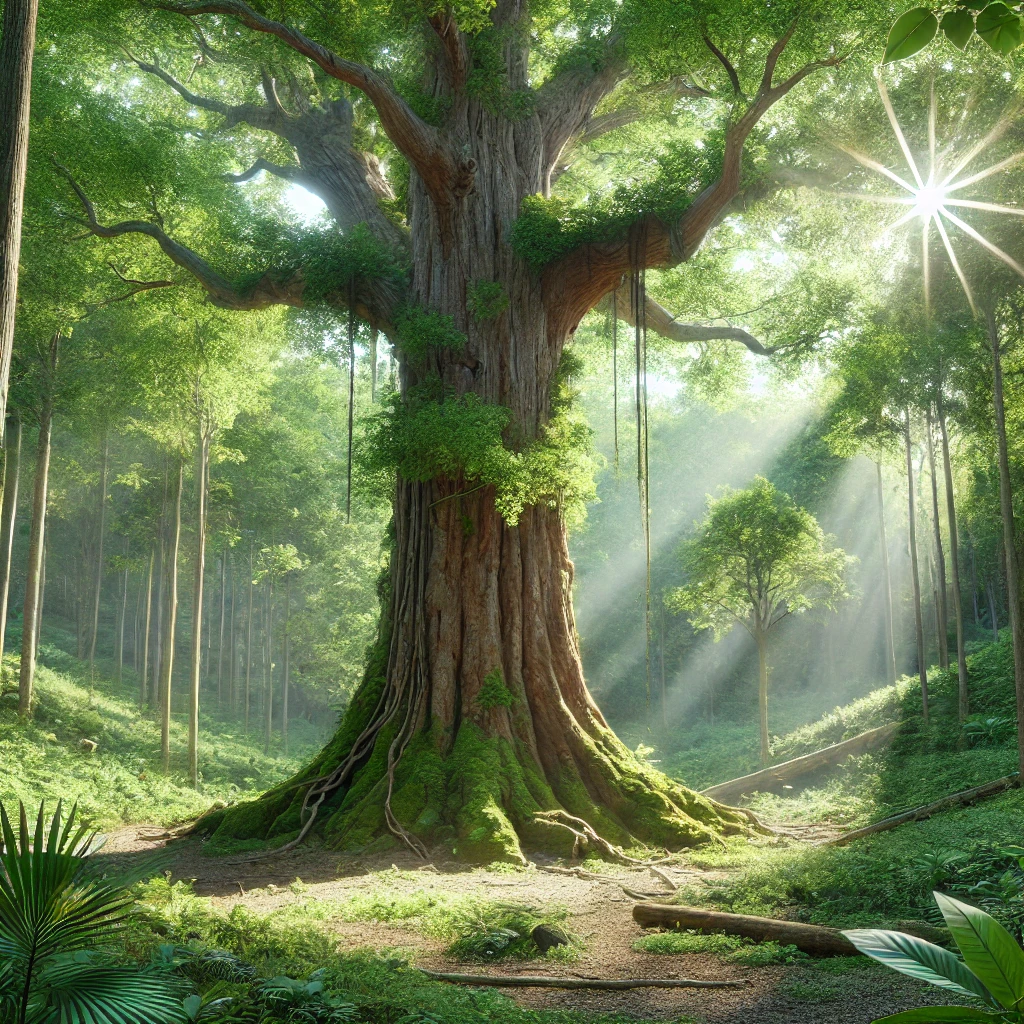
Relax under our tree, a favorite resting place for our butterflies. Did you know that some trees are thousands of years old? Trees have existed on Earth for about 370 million years, with an estimated three trillion mature trees in the world today.
What would we do without trees?
Under this tree of life, let’s consider why trees are so crucial. Trees produce the oxygen we breathe and absorb the carbon dioxide we exhale. A single mature tree can produce enough oxygen for two to ten people. Nearly half of all known species on Earth live in forests, so trees provide essential homes for countless creatures.
Trees are natural air conditioners for our cities and our planet. Over 40 years, a single tree can absorb up to a ton of CO2, removing a broad range of pollutants from the air. They reduce noise, provide habitat for thousands of species, and prevent soil erosion and landslides. Trees even reduce stress and calm us.
Yet, rainforests are being cut down at a rate of 27 football fields per minute. What would we do without trees? The world would be a bleak place. So next time you see a tree, whether in a city or forest, remember all the ways we owe our thanks to it.
Dinosaur Eggs in a Nest
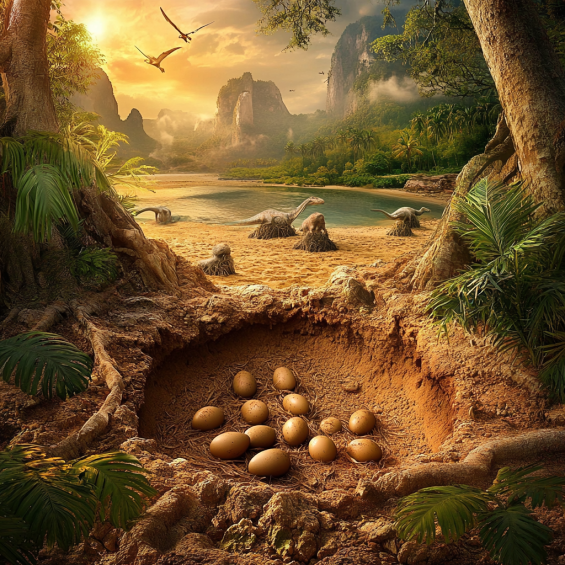
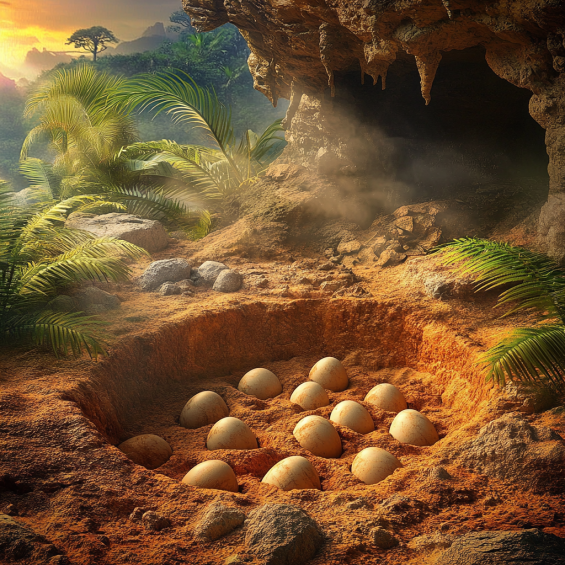
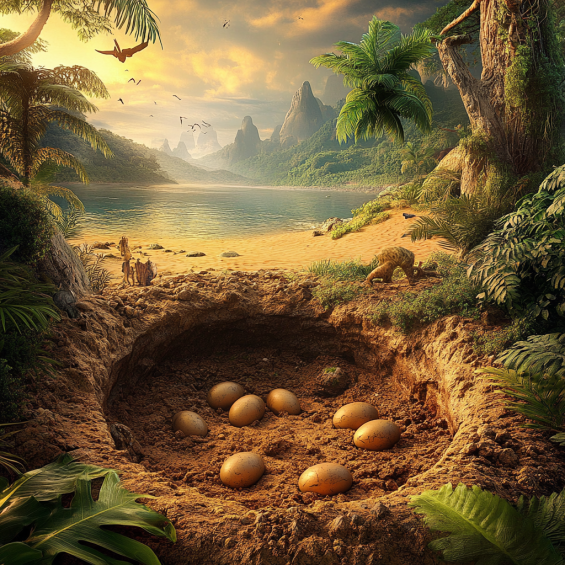
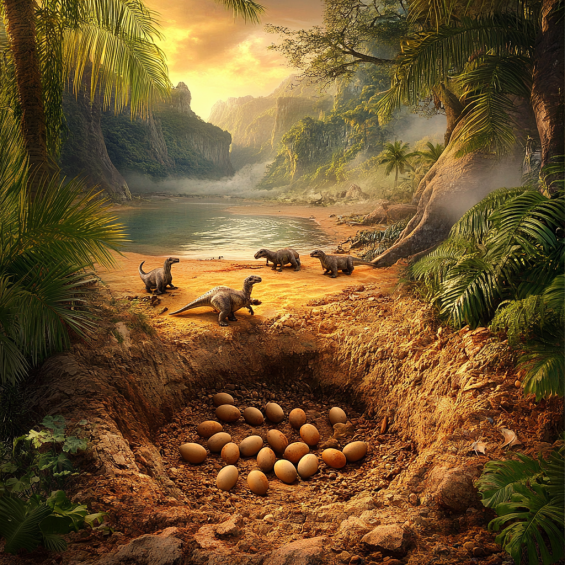
Congratulations! You’ve found dinosaur eggs! They’re smaller than you might have expected, aren’t they?
But this is their actual size. What species could it be?
Like today’s reptiles and birds, dinosaurs reproduced by laying eggs. Discoveries of dinosaur eggs have been made worldwide since the 1920s.
The first dinosaur eggs were found in southern France in 1895, but at the time, they were thought to belong to some giant birds. Interestingly, these massive creatures laid relatively small eggs compared to their size. Isn’t it amazing to imagine a tiny, adorable dinosaur that hasn’t yet grown into a giant?
Fun Fact:
The Natural History Museum in London had a beautiful 175-year-old mineral called Agate in its collection. It was found in central India and measured about 15 cm. Because it was so beautiful, a local curator decided to display it in a members-only salon in 2018. However, a few months later, while visiting a mineral exhibition in France, she was shown a dinosaur egg turned into Agate and realized it looked exactly like the mineral she had recently displayed.
She and other professors started investigating and discovered that it was indeed a fossilized dinosaur egg, likely of the Titanosaurus species. The mineral was found between 1817 and 1843, a time when people were unaware of dinosaurs‘ existence! It is possible that people throughout history have unknowingly used fossilized dinosaur eggs without realizing what they actually held in their hands.
Fascinating! A similar incident occurred in the Indian village of Padaliya, where villagers worshipped smooth stones for generations, offering flowers and coconuts to them. They prayed for rain and protection of their herds, treating these stones like deities. However, when paleontologists discovered a fossil site in the area, they realized these sacred stones were not just rocks but fossilized dinosaur eggs, likely also belonging to Titanosaurs, millions of years old.
If you’re captivated by the idea of a dinosaur egg, a real fossilized dinosaur egg from the Gobi Desert can be seen at the National Museum in Prague.
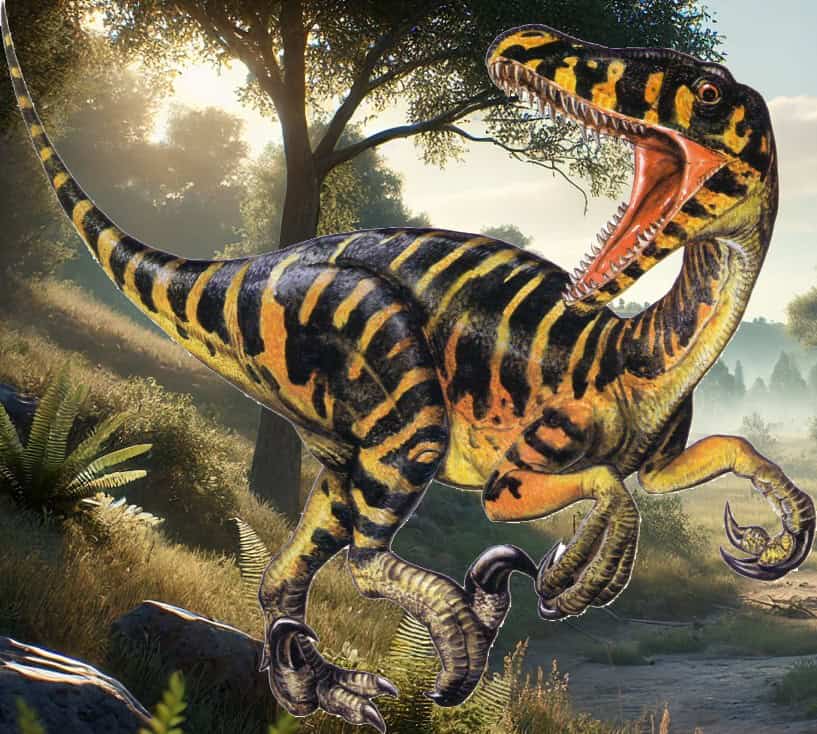
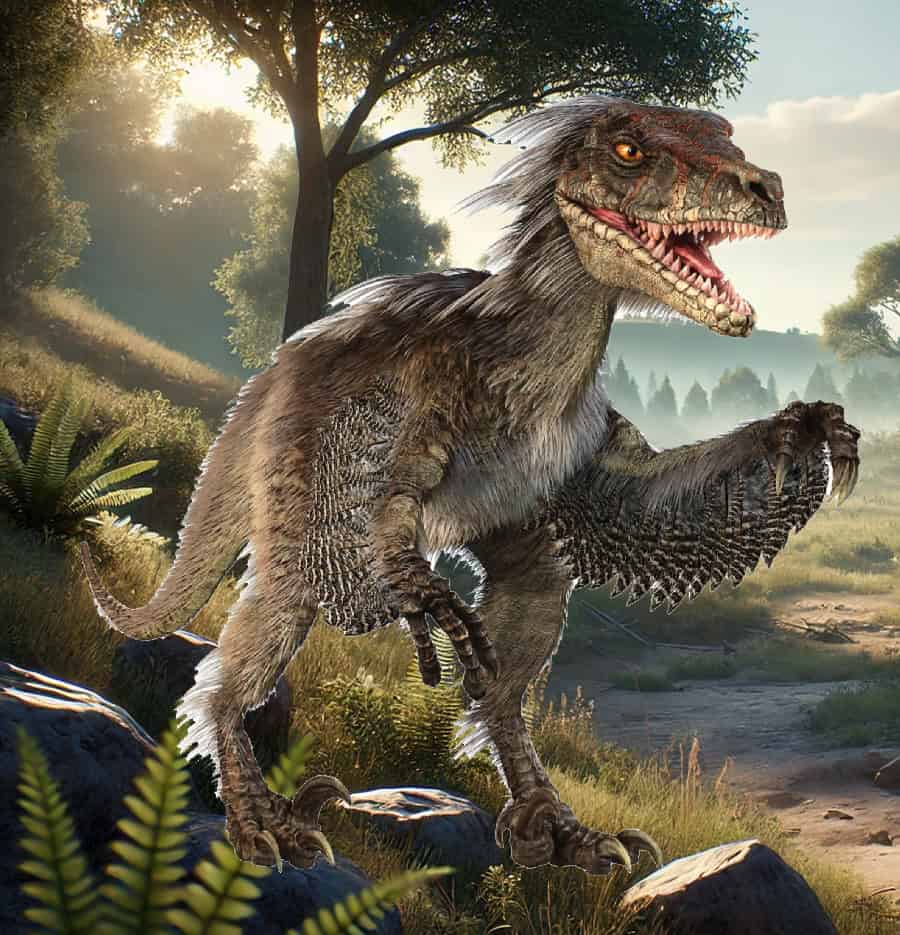
This predator lived during the Late Cretaceous period, about 75 to 71 million years ago, and you may recognize it as the menacing killer from Jurassic Park. However, modern science has shown us that the real Velociraptor didn’t look quite as it did in the famous Hollywood film. The actual Velociraptor would resemble a feathered, flightless bird with teeth in its jaws and around 6 cm claws on its forelimbs.
It was also significantly smaller—measuring around 2 meters (half of which was tail) and weighing only about 20 kg. So, it was about the size of a modern turkey and even resembled today’s birds with its ample feathers, which were discovered on a fossil found in the Gobi Desert in 2007. It did not hunt in packs, as in the film. It could run up to 40 km/h, had very sharp hearing, and was an adept hunter.
In 1971, a group of paleontologists made a unique discovery: the interlocked skeletons of a Velociraptor and a herbivorous Protoceratops, preserved in the midst of battle—a one-of-a-kind find showing dinosaurs preserved at the moment of their fight.
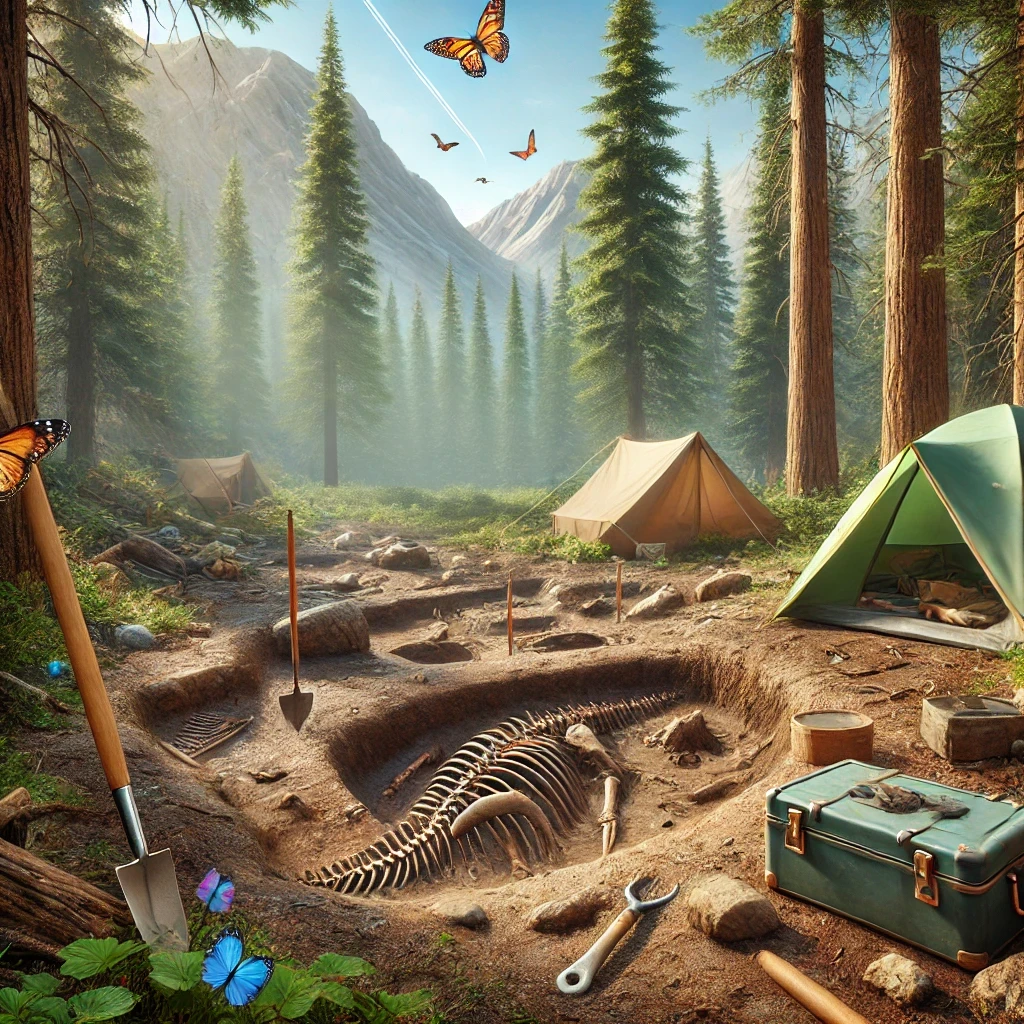
Camp
Here is where our paleontologists camp, revealing new findings from ancient times each day. You can see the real tools they use in excavations left here while they took a break.
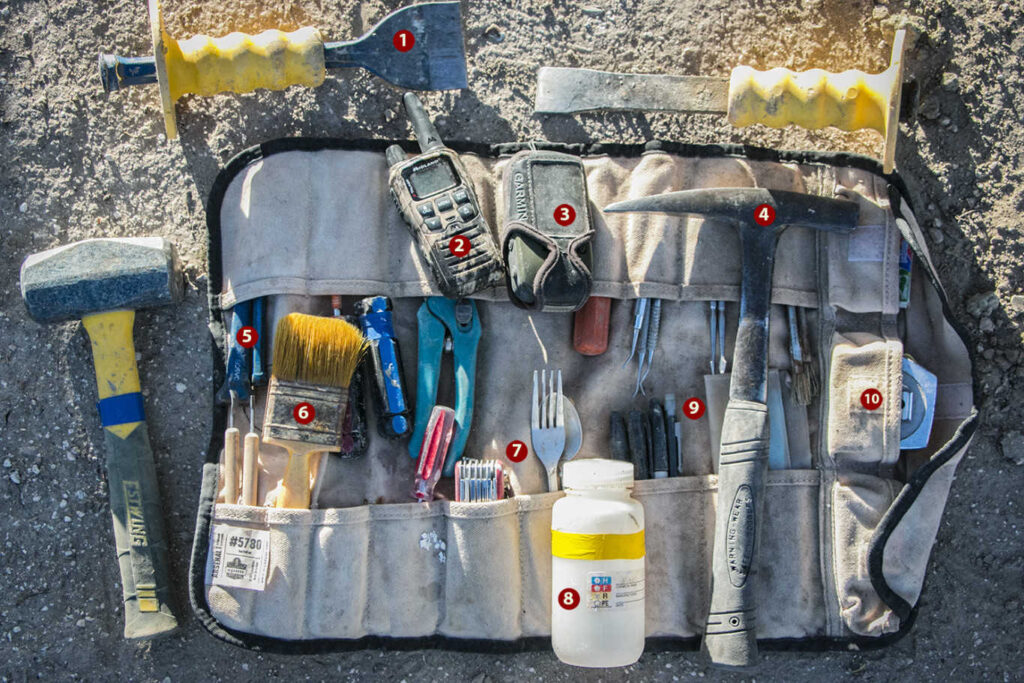
Paleontological tools
You’ll find brushes for cleaning and organizing, trowels and spatulas for carefully removing earth layer by layer, and brooms for larger fossil fragments. The nails are used to mark excavation quadrants, and tape measures to record their findings. The small plastic bottle holds an acetone. solution to stabilize bones before they are transported to the lab. And to ensure they don’t get lost, they use a GPS device.
Do you feel like becoming a paleontologist? If so, you can try it out with our excavation kits at the reception and dig up your very own dinosaur!
Field Equipment for Real Paleontologists
Journalist Michael Mozdy asked Utah Museum of Natural History paleontologist Carrie Levitt-Bussian to share her field kit essentials. Here’s a look at her tools:
Chisels – Fossils are embedded in stone—sandstone and shale, which can be as hard as concrete! While large tools are also used, chisels and hammers are needed for finer work once major stones are cleared.
Radio – Most digs are remote, with some team members prospecting for new sites while others work on the fossils. Radios help teams stay connected and coordinate.
GPS – Critical for tracking each excavation site, GPS coordinates are recorded in field journals.
Geological Hammer – Every paleontologist has a unique attachment to their favorite hammer.
Additional Tools – Varied chisels and probes, from large ones to dental tools, allow for precise stone removal from fossils.
Brushes – For revealing fossils, brushes work better than fingers, which can damage specimens.
Multipurpose Tools – Eating utensils, and sometimes a Swiss Army knife, come in handy for meals.
Vinac – This is a consolidant solution to stabilize bones for transport to the lab.
Markers and Plastic Bags – Used for cataloging bones and keeping track of individual fragments.
Fossils need to be measured, just like other distances in a quarry. Although we could wear them like construction workers on our belts, since we often move in the narrow spaces of the quarry, we leave the tools in the kit and take them when we need them.
Combat mission
Hooray! We hope you enjoyed your adventurous journey and discovered all the artifacts. As you exit Papilonia, a final challenge awaits you at the reception desk. Can you find the skeleton of a flying pterosaur?
The name, which means „winged finger,“ was the very first pterosaur discovered. It was capable of flying around 16,000 kilometers at an average speed of about 130 km/h over 7 to 10 days. Now, go chase after it! What is this pterosaur’s name? If you give the correct answer to the staff at the reception, a reward awaits you!